Mercer Slough: The Working Wetland Hiding in Plain Sight Beside I-405
Mercer Slough Nature Park protects one of the largest remaining Lake Washington wetlands — with boardwalks, a blueberry farm heritage and an environmental learning center.
It is possible to drive Interstate 405 through Bellevue for years without understanding what lies just west of the freeway. Mercer Slough Nature Park protects a broad wetland where Kelsey Creek slows and spreads before reaching Lake Washington, a landscape of channels, marsh, boardwalks and forest that feels far removed from the traffic moving above and beside it.
The slough is habitat first. Wetlands of this kind store water, filter runoff and support birds, amphibians, fish and mammals in the middle of a built-up corridor. That ecological work is the reason the park matters beyond recreation. Every boardwalk conversation about herons or salmon is also, whether visitors realize it or not, a conversation about how the Eastside handles its rain and its creeks.
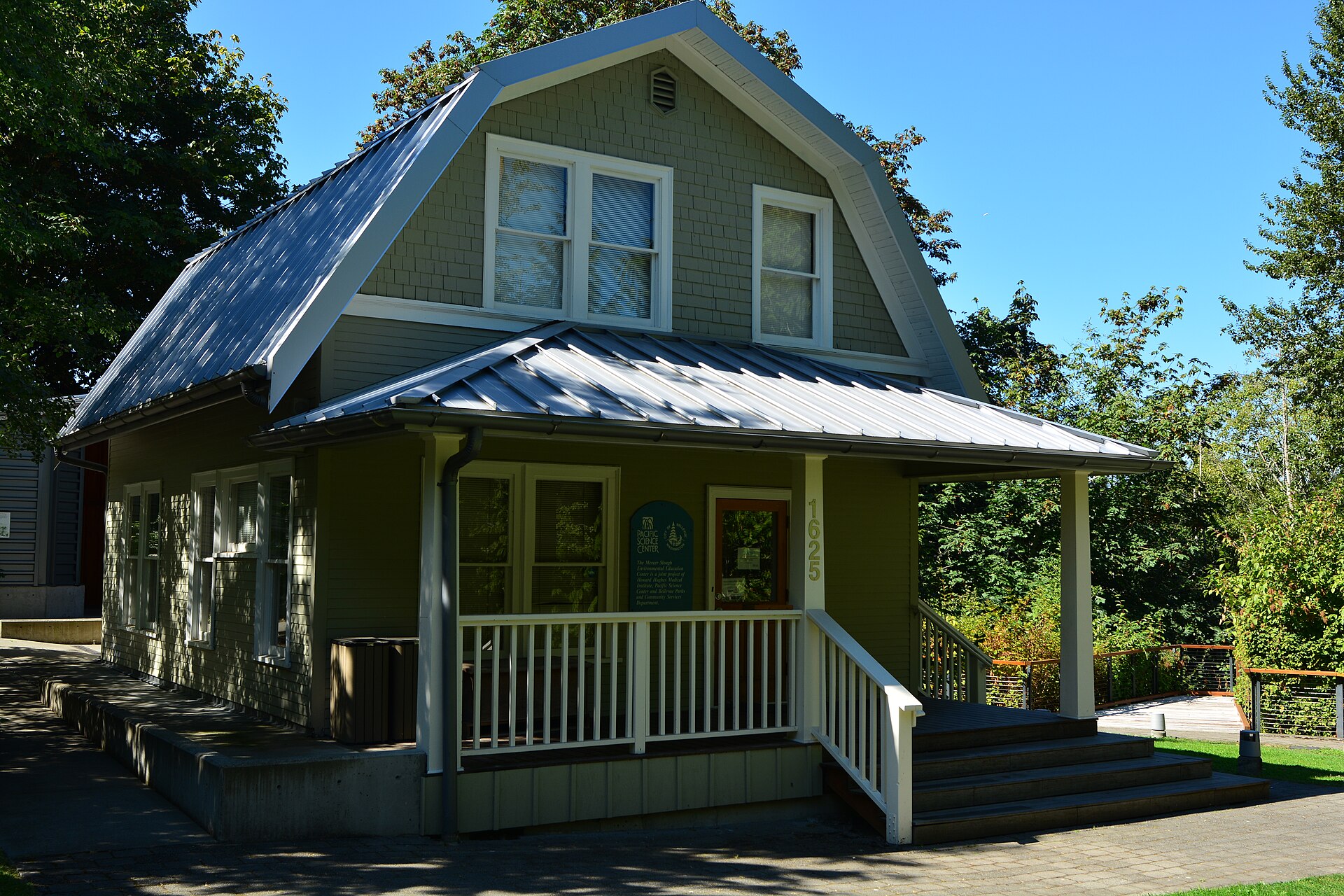
The Mercer Slough Environmental Education Center, a partnership involving the Pacific Science Center and the City of Bellevue, gives the park its classroom. A former house on the site has been incorporated into the center, and programs there introduce children and adults to wetland ecology at the place itself rather than from a textbook. Learning to read cattails, alder and open water is easier when all three are in front of you.
The park also carries Bellevue's farming past. This low ground was once worked agriculturally, and the nearby blueberry farm tradition is part of the slough's story. That history helps explain the landscape's openness: fields, drainage and cultivation shaped parts of what now reads as wild, and restoration here is a negotiation between past uses and present ecology, not a return to an untouched state.
In November the slough is at its most atmospheric and its most demanding. Expect standing water, mud, active creeks and early darkness on the trails, and dress for a place that is genuinely wet. In return, the park offers the strongest reset in Bellevue: ten minutes from the freeway, a working wetland going about its business as it has through every version of this city.